

Home Student Life Athletics
Athletics
Athletics enrich the lives of all students at Randolph-Macon Academy. Each sports team has several levels so students of all abilities have the opportunity to make their mark! Teamwork, mental toughness, sports IQ are developed with coaching staff while fostering an inclusive and encouraging
environment.
Randolph-Macon Academy competes in two conferences across all different sports. We are also a member of the Virginia Independent Schools Athletic Association (VISAA) for state affiliation in all sports.
Virginia Independent Athletic Conference (VIAC):
8-man football, boys/girls basketball, cross country, volleyball, baseball, boys/girls soccer
Greater Piedmont Athletic Conference (GPAC):
Boys/girls tennis, swimming, golf


Concussion Policy
Training
Training Overview
Training

Mascot: Yellow Jacket
Quick Facts
Golf
Spring Sports
Tennis (Boys)
Spring Sports
Soccer (Girls)
Spring Sports
Track & Field
Spring Sports
Baseball
Spring Sports
Swimming
Winter Sports
Wrestling
Winter Sports
Basketball (Girls)
Winter Sports
Basketball (Boys)
Winter Sports
Volleyball (Girls)
Fall Sports
Cross Country
Fall Sports
Tennis (Girls)
Fall Sports
Soccer (Boys)
Fall Sports
Football
Fall Sports
Accomplishments
Quick Facts
Concussion Policy
Randolph-Macon Academy Athletic Training Department Concussion Policy and Procedures
What is a Concussion?
A concussion is a violent shaking or jarring action to the brain, usually as a result of impact with an object or the ground. They can range from minor to major, but all concussions temporarily interfere with the way your brain works. Every concussion, no matter how mild, injures your brain. This injury needs time and rest to heal properly.
Any athlete who exhibits signs, symptoms or behaviors consistent with a concussion shall be immediately removed from the event (practice or game) and shall not return to competition until cleared by the school’s Athletic Trainer or the Director of the ImPACT program, or Team Neurologist.
Common Signs and Symptoms of a Concussion:
Concussion signs and symptoms generally fall into four categories: physical symptoms, cognitive symptoms, emotional symptoms, and sleep symptoms, and may include:
| Physical | Cognitive | Emotional | Sleep |
| Headache | Feeling mentally “foggy” | Irritability | Drowsiness |
| Nausea | Feeling slowed down | Sadness | Sleeping less than usual |
| Vomiting | Difficulty concentrating | More emotional | Sleeping more than usual |
| Balance | Difficulty remembering | Nervousness | Trouble falling asleep |
| Problems | Forgetful of recent information and conversations | Depression | |
| Dizziness | Confused about recent events | Aggressiveness | |
| Visual Problems | Answers questions slowly | ||
| Fatigue | Slurred speech | ||
| Sensitivity to light | Repeats questions | ||
| Sensitivity to noise | |||
| Numbness/tingling | |||
| Dazed or stunned | |||
| Ringing in the ears | |||
| Loss of consciousness |
‘Why It Is Important to Report Symptoms
Second Impact Syndrome – a condition in which the brain swells rapidly after a person suffers a second concussion before symptoms from an earlier one have resolved. The condition is often fatal.
Make sure to report all signs and symptoms to your athletic trainer/health care professional! Delaying treatment only delays your return to play!
Concussion Assessment and Management
It is the duty of the Athletic Trainer to assess and manage those athletes that have sustained a concussion. This includes a thorough evaluation at the time of injury or at the onset of symptoms. It is also the responsibility of the athlete’s teammates and/or coaches that have seen or have any knowledge of a possible head injury to report such knowledge of what they saw or symptoms to the Athletic Training Staff.
ImPACT testing is available to athletes in sports that are considered to be of high risk for concussion (football, volleyball, lacrosse, wrestling, basketball, soccer, baseball, and softball). ImPACT testing measures baseline neuro-cognitive function and is used as a tool to help determine when it is safe for an athlete to return to competition. ImPACT testing can help to objectively evaluate the concussed athlete’s post-injury condition and track recovery for safe return to play, thus preventing the cumulative effects of concussion. It is highly recommended but not required that those athletes be tested at the beginning of their season.
Management Recommendations
- No athlete with a concussion or with Signs/ Symptoms of a concussion should continue to play or return to a game after sustaining a concussion. They shall be removed from participation and evaluated. A student-athlete diagnosed with a concussion SHALL NOT return to competition that day and will undergo concussion management/monitoring as outlined in this Manual/Protocol by the Randolph-Macon Academy Sports Medicine team. A student-athlete may only return to participation when asymptomatic at rest, with exertion, and when cleared by a Physician and/or the discretion of the Team Physician, Team Neurologist.
- An individual sustaining a concussion should cease doing any activity that causes the symptoms of a concussion to increase (e.g. headaches, dizziness, nausea, etc.). This includes not only physical activity but mental activities such as reading, computer work, texting, loud music (I-Pods) and watching television. Continuing activities, or exercise that increases symptoms, can delay the recovery from the concussion.
- School attendance and activities may need to be modified. While some individuals may be able to attend school without increasing their symptoms, the majority will probably need some modifications depending on the nature of the symptoms. Trial and error may be needed to discover what they can and cannot do.
- If students are unable to attend school for an entire day without symptoms, they may attend for a half day. Some students may only be able to attend for one period, some not at all, due to severe headaches or other symptoms. Frequent breaks with rest periods in the nurse’s office may also be necessary. Often, alternating a class with a rest period may be helpful. As recovery proceeds, gradually, hours spent in school may be be increased.
- They should not participate in physical education or music classes.
- Workload and homework may need to be reduced. Frequent breaks while doing homework may be helpful. Projects and papers should be postponed. Pre-printed class notes and tutors may help to relieve the pressure of schoolwork.
- Tests: If there are concentration and memory problems, quizzes, tests, PSAT tests, SAT tests and final exams should be delayed or postponed. If test results are poor, a note to the school should request that the scores be voided. Extra time (un-timed tests) may be necessary initially when test taking is resumed.
- Neuro-cognitive testing is an important component for the management of concussions. ImPACT testing should only be used as a tool, and should not be the only deciding factor in returning a concussed athlete to play. Generally, the symptoms of a concussion disappear before the neuro-cognitive findings return to normal, although occasionally, this can be reversed. It is for these reasons that symptom evaluation alone can not be used as the sole criteria for return to play.
- No athletes should return to contact competitive sports until they are symptom free, both at rest and with exercise and have normal neuro-cognitive testing. When they have no headaches or other concussion symptoms athletes can begin the return to play protocol developed by the Athletic
- It is important to remember, each concussion should be treated individually. No one guideline will work for every athlete. The coaches, parents, and the athletes themselves, must be educated about the signs, symptoms and treatment of concussions. Many times, the athlete may be unaware that they have actually sustained a
Concussion Recovery
Athletes who are not fully recovered from an initial concussion are significantly vulnerable for recurrent, cumulative, and even catastrophic consequences of a second concussion.
Such difficulties are prevented if the athlete is allowed time to recover from a concussion and return to play decisions are carefully made. No athlete should return to their respective sport or other at-risk activities when symptoms of concussion are present and recovery is ongoing.
In summary, the best way to prevent difficulties with concussion is to manage the injury properly when it does occur.
Training Overview
The goal of the Athletic Training Department at R-MA is to ensure our athletes receive excellent medical care on and off the field. We do this by requiring a medical history and profile of each athlete in our online Magnus Healthcare Tracking System. This enables each parent to document all medical history, including immunizations, allergies, surgeries, medications, doctor’s annual medical physical. It also provides permission for R-MA to treat their student and gives us vital contact information that enables us to contact families around the world in case of a medical emergency.
Filling out the important medical forms often starts the prevention treatment of our athletes. We see to any athletic injuries that happen during athletic activities such as practices or competitions. Once an athlete is injured we evaluate, treat, and help in the rehabilitation of that athlete. We often make the medical decision to further allow the player to return to the game or not based upon the extent of injury. It is our goal to get the athlete back on the field as quickly as possible but also as safely as possible.
Mascot: Yellow Jacket
R-MA’s Mascot is Sting the Yellow Jacket, showcasing the Academy’s colors of Black and Lemon!
Golf
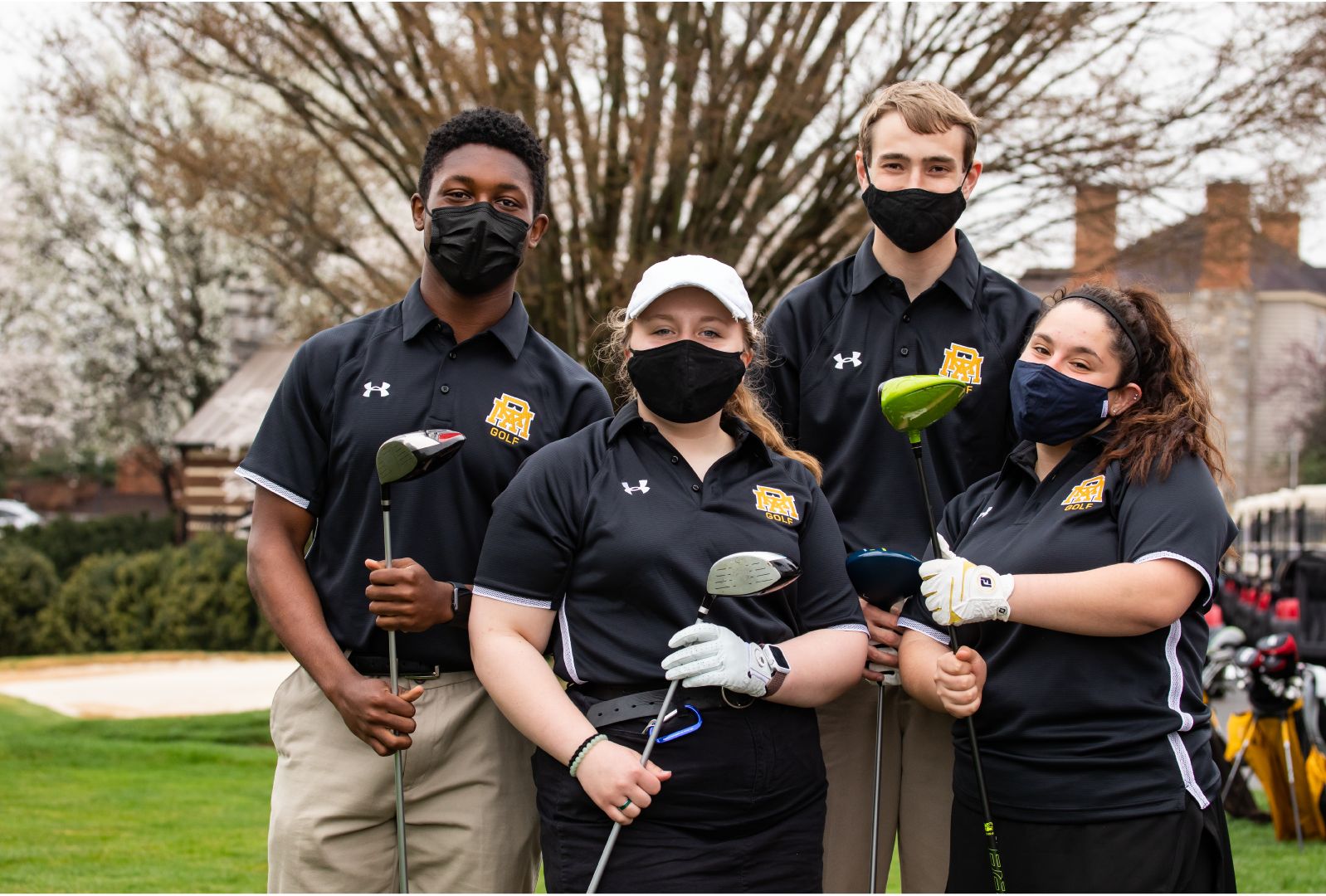
Golf is a co-ed sport that takes place in the spring. Through golf you are able to see the great Virginia scenery on some of the finest golf venues in the state. Our team usually has athletes at all levels and has had its share of accomplishments. In 2019 we had two golfers qualify for the V.I.S.S.A. State Tournament. In 2017 our team was the runner-up in the D.A.C. tournament and had the Conference Player of the Year and the Tournament Champion.
Tennis (Boys)

Tennis players train in problem solving all the time, during each, and between, each point. It is you against one opponent. Cunning, anticipation, ability to identify weaknesses in the opponent’s game, concentration, and mental recovery – those are all tactics and skills used to become successful in outwitting an opponent, even those that are far more powerful. Through the experiences they share on and off the court, players have the opportunity to come away as lifelong enthusiasts of the sport and lead healthier, happier lifestyles because of it.
Soccer (Girls)

Whether a cold afternoon in early March or a summery day in May you will see our girls on the practice field, hard at work mastering their craft. Our girls soccer program recent success can be attributed to one thing – hard work! With players of all levels we have witnessed the following accomplishments, 2019 D.A.C. tournament champions and a V.I.S.A.A. State Tournament berth, 2016 D.A.C. tournament champions, 2013 D.A.C. tournament and regular season champions, 2012 D.A.C. regular season, co-champions.
Track & Field
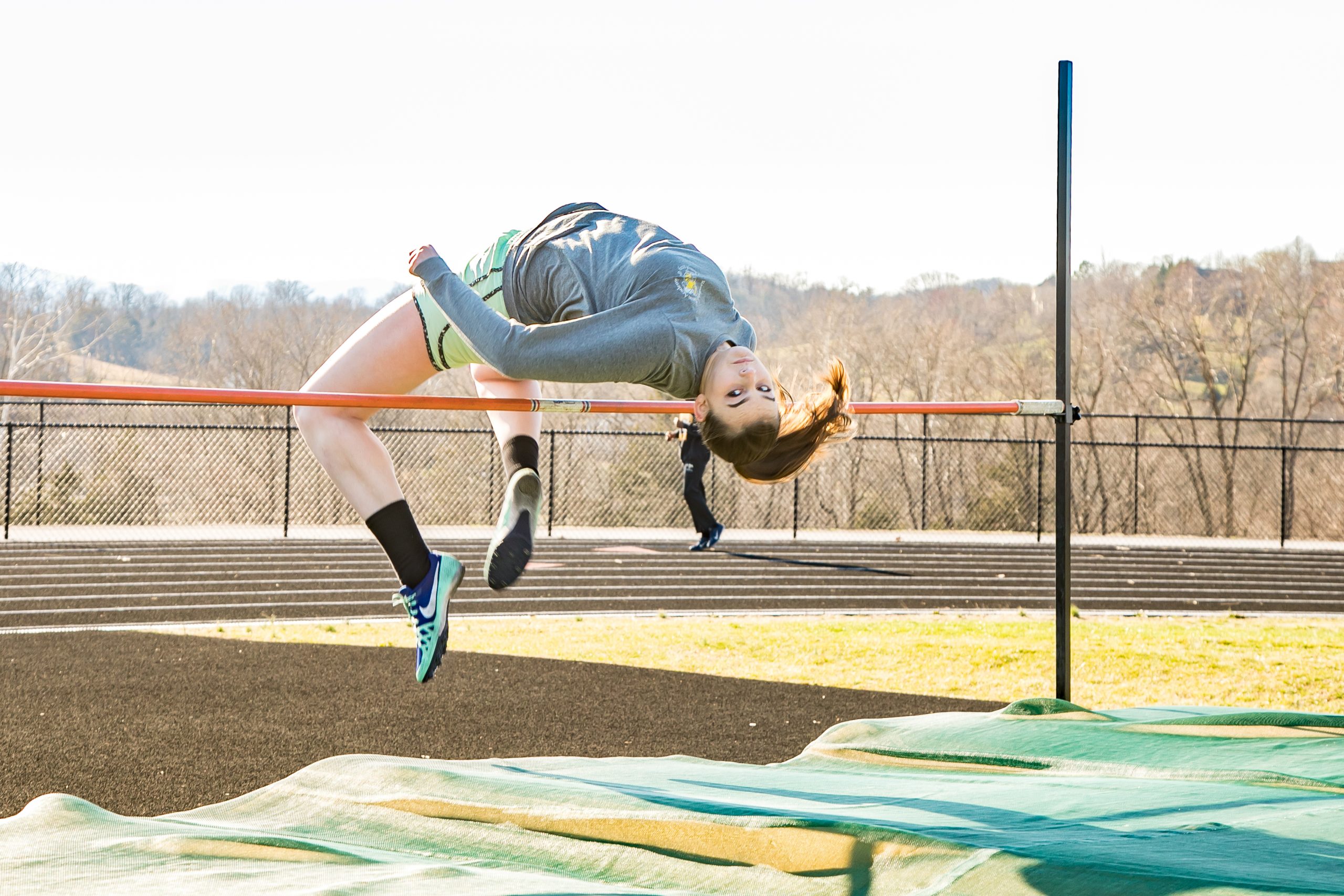
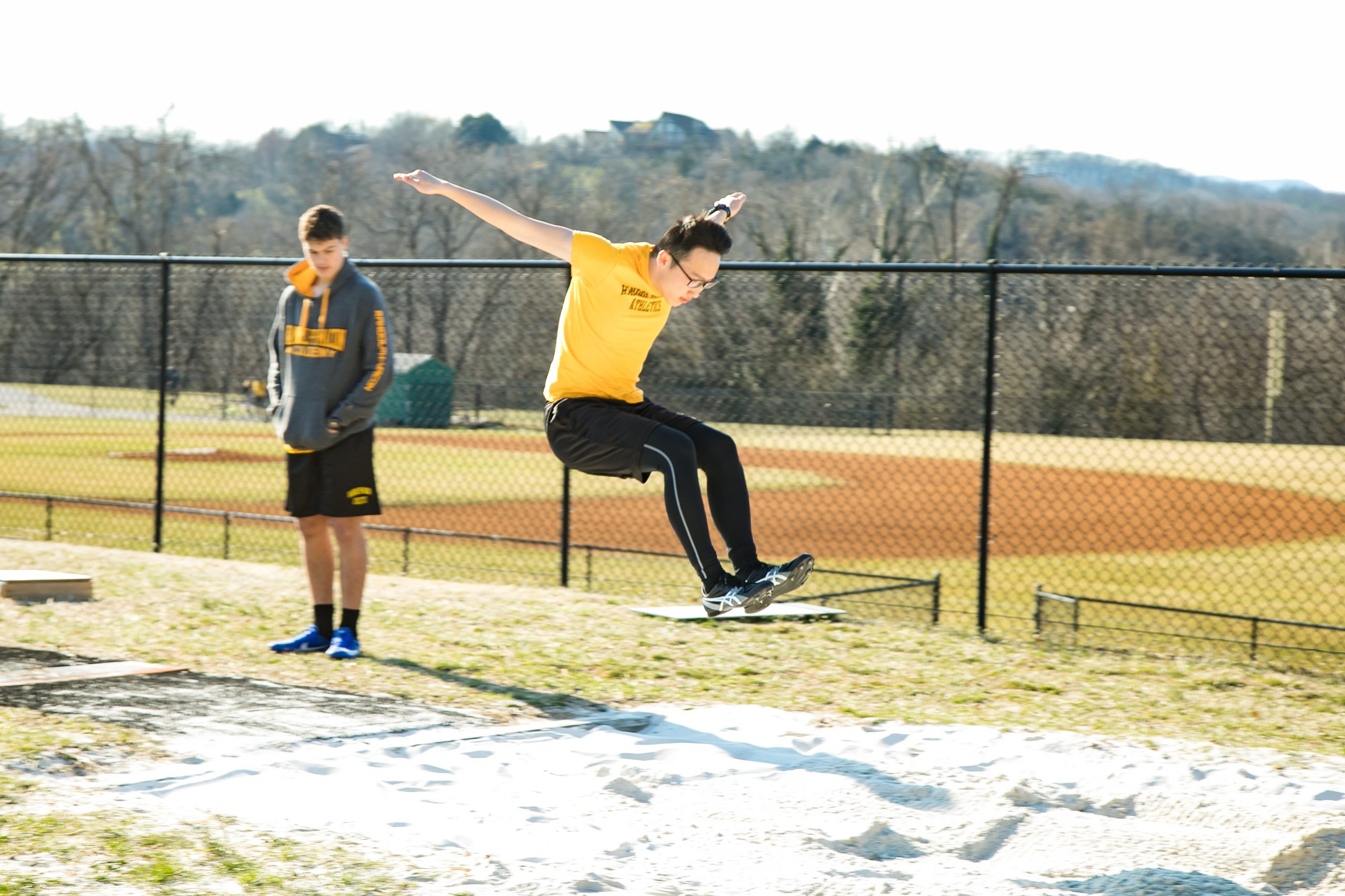
Track & Field, which is a sport offered in the spring, gives athletes the opportunity to put in the hard work to find success in one or several events. Whether jumping, sprinting, participating in a throwing event or running long distances there is something for every athlete. Recently we have had numerous athletes earn a medal for placing in state meet or become state champions in different events.
Baseball
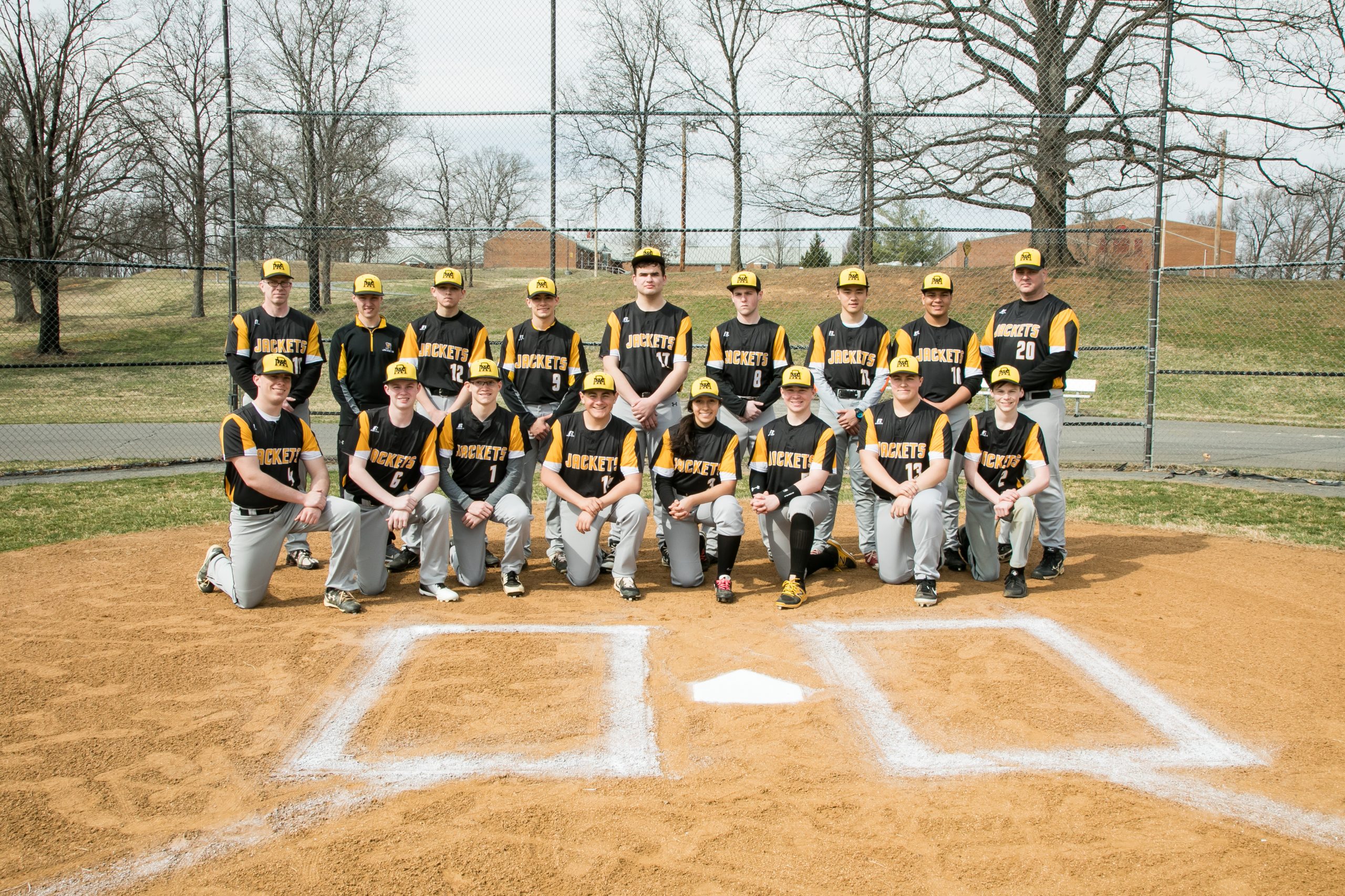
Any sport whose field is in the shape of a diamond is special! With no time limit you are likely to see anything within a Yellow Jacket baseball. Home runs, perfectly pitched games or simply working your way out of a “slump” are all things that will stay with our players for a lifetime.
Swimming

Swimming, a co-ed sport at R-MA, is another of our lifetime sports that encourages both individual and team participation. Personal records are tallied right alongside championship performances which gives our athletes something to strive for each day in practice. Whether participating in an individual event or on a relay team our coaches strive to get the best out of each athlete.
Wrestling

Wrestling is a co-ed winter sport at R-MA. One of the most commonly used metaphors for a high school sports season is referring to it as a “grind”. The depiction is usually a reference to the aspects that go beyond the box score. Although those challenges occur in nearly every sport, few high school seasons deal with the mental and physical strains as much as wrestling. This “grind” becomes a badge of honor for our athletes who come in all shapes and sizes. Recent accomplishments include twelve State Medalists and four National Prep Tournament qualifiers.
Basketball (Girls)

Our Girls Basketball team has had plenty of success in recent years. The bonds that these young ladies have established beyond the court are even more remarkable. In February the girls regularly play in front of a “packed” Melton Gym against one of their rivals in a late season tournament game.
Basketball (Boys)


Boys basketball is another popular choice for our students, at both the Varsity and Junior Varsity level. Played during the winter months, the basketball season always brings exciting games to Melton Gymnasium. Rarely a day goes by “on The Hill” where you do not see one of our students trying to improve their basketball skills.
Volleyball (Girls)

When it comes to matching individual skill levels with teamwork, few sports match volleyball. Our team plays in the fall and it is alway a pleasure to watch this squad improve individually, as a team and bond on and off the court.
Cross Country


Cross Country is a challenging co-ed sport that encourages both individual and team participation and develops a love for running. The great thing about cross country is that everyone who tries out for the sport generally gets to compete, and personal records are tallied right alongside championship performances. The philosophy is simple: have fun, race hard and train well.
Tennis (Girls)

Tennis players train in problem solving all the time, during each, and between, each point. It is you against one opponent. Cunning, anticipation, ability to identify weaknesses in the opponent’s game, concentration, and mental recovery – those are all tactics and skills used to become successful in outwitting an opponent, even those that are far more powerful. Through the experiences they share on and off the court, players have the opportunity to come away as lifelong enthusiasts of the sport and lead healthier, happier lifestyles because of it.
Soccer (Boys)

Our Varsity Boys Soccer team is a popular choice for our athletes. Played in the fall, our students are always eager to begin the school year playing soccer. A benefit of soccer at R-MA is its international allure, which serves as a chance to see our diverse student population come together in a team setting.
Football

Varsity Football has been a longstanding tradition at R-MA, and acts as a tool that allows our students to learn the values of knowledge, leadership and character. During the 2025-26 season, several R-MA players earned Virginia Independent School Football League (VISFL) honors, including First Team All-State Kicker, All-State Linebacker, All-State Defensive Back, All-State Athlete, All-State Wide Receiver, and All-State Kick Returner; and one R-MA player was named VISFL Defensive Player of the Year!
Accomplishments
2025–26
Girls Soccer
- First Team All-Conference: Misgana Reynolds
Boys Basketball
- Hoopin On The Hill Tournament Champions
- First Team All-Conference: Nolan Kirabo, Chester Notewo
Girls Basketball
- VISAA Division III State Tournament appearance
- First Team All-Conference: Bijou Kebbay
- Second Team All-Conference: Ella Sauvager, Dleanna Hoosain
Swimming
- All-Conference: Yucheng Sun, Isaiah Lora-Pena, Samuel Bonnot, Kennedy Spakes, Nathaniel Wong, Lucy Ngo
Volleyball
- Second Team All-Conference: Bijou Kebbay, Ranae Omondi
Boys Soccer
- First Team All-Conference: Finn Strabley, Daryl Muhindo
- Second Team All-Conference: Emerick Halls, Francis Banek-Gabelle, Roman Trombulak
Girls Tennis
- First Team All-Conference: Yiannah Kats
Cross Country
- All-State: Michael DeMato, Jr., 11th place
- All-State: Isaac Kucia ’30, 19th place
Football
- Teni Abegunde: VISFL First Team All-State, Kicker
- Akhil Patnala: VISFL First Team All-State, Linebacker
- Chester Hendji-Notewo: VISFL Defensive Player of the Year; VISFL First Team All-State honors at Defensive Back, Athlete, Wide Receiver, and Kick Returner
2024–25
Football
- VISFL Runner-Up
Girls Soccer
- All-Conference: Lillian Felton, Katie Reagan
Swimming
- All-Conference: Jonathan Gasaatura, Iman Vactor, David Nelson, Brynn Thompson, Stanley Ma, Leo Burge, David Shen, Nick Bedwell, Renae Omondi, Tariq Vactor, Jomi Ogunbiyi
Boys Basketball
- Hoopin On The Hill Tournament Champions
- First Team All-Conference: Tega Esievo, Nolan Kirabo
- Second Team All-Conference: David Kayeye
Cross Country
- All-Conference: Iman Vactor, Ella Killebrew, Michael DeMato, Cole Sauvager
2023–24
Boys Basketball
- GPAC Conference Tournament Runner-Up
- Hoopin On The Hill Tournament Champions
- GPAC Player of the Year: Bilal Kebbay
- GPAC Coach of the Year: Taylor Vazquez
- First Team All-Conference: Bilal Kebbay, Chidera George
- Second Team All-Conference: Jojo Doku, Nolan Kirabo
2022–23
Cross Country
- Girls team: GPAC Champions
- Girls team: Sixth place at the state meet
- Boys team: 10th place at the state meet
Boys Basketball
- GPAC Conference Tournament Champions
- First Team All-Conference: Bilal Kebbay, Chidera George, Patrick Brewer
- GPAC Coach of the Year: Taylor Vazquez
Wrestling
- VISAA Team Sportsmanship Award
Golf
- Nancy Pang: Second place in Division II at the VISAA Girls State Golf Tournament
Track and Field
- Mayo Ojutalayo: VISAA State Champion in the 100-meter and 200-meter events; ranked No. 1 in the state in the 100 meters and in the top 25 in the 200 meters during the season
- Kai Morgan: VISAA State Champion in Shot Put
- Men’s and women’s 4 × 100-meter relay teams: Second place at the VISAA state meet
2021–22
Boys Basketball
- First Team All-Conference: Amir Payne